
For most Kenyan homes using more than ~150 units a month, a well-sized hybrid solar system typically pays for itself in about 4 to 6 years, then delivers near-free power for the remaining 15–20+ years of its life. With KPLC’s effective all-in rate around KSh 26–29 per unit (2026), the savings add up quickly. Your exact payback depends on your usage, tariff, and system.
Get a payback estimate for your home →
Solar’s biggest objection is the upfront cost – but the right question isn’t “what does it cost?”, it’s “how long until it pays for itself, and what do I save after that?” This guide answers both with a transparent, worked example using real 2026 Kenyan numbers, so you can judge whether solar makes financial sense for your home or business.
For system prices, see Cost of Solar Installation in Kenya; for the service overview, see solar installation services.

Payback period vs ROI – what’s the difference?
- Payback period = how long until your savings equal what you paid. A 5-year payback means the system is “free” from year 5 onward.
- Return on investment (ROI) = the total value the system returns over its life, relative to its cost. A system that pays back in 5 years and runs 20+ years delivers many times its cost in lifetime savings.
What drives your solar payback
- Your electricity tariff. The more you pay KPLC per unit, the faster solar pays back. Kenya’s rates are high by global standards, which helps solar economics.
- Your consumption. Bigger bills mean bigger savings — solar pays back faster for heavier users.
- System cost. A right-sized system (not overbuilt) shortens payback.
- How much do you self-consume? Using your own solar (rather than exporting) captures the full retail value of each unit.
- Sunlight. Kenya’s ~5 peak sun hours a day give strong, consistent generation.
What you actually pay KPLC (the number that matters)
Payback is driven by your all-in cost per unit, not just the headline energy charge. KPLC domestic energy charges are tiered (before taxes): about KSh 12.23/unit for under 30 units a month, KSh 16.45 for 31–100 units, and KSh 19.08 for above 100 units. But the energy charge is typically less than half your bill; fuel and forex adjustments, levies, and VAT are added on top. In practice, the effective all-in residential rate has been around KSh 26–29 per unit in 2026. That higher real rate is what solar offsets, and it’s why solar pays back faster than the headline tariff suggests.
Tariffs and levies are set/updated by EPRA and change (fuel and forex adjustments move monthly). KPLC applied in March 2026 to raise tariffs from July 2026, but the Ministry of Energy withdrew that review, so current rates hold for now but remain under pressure. Verify the current rate on your own KPLC bill before relying on these figures.
Worked example: payback on a 5kW home system
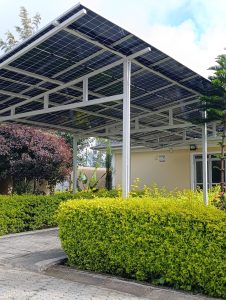
Let’s run the numbers for a common setup. (Illustrative, using indicative 2026 figures – your result will differ.)
The assumptions
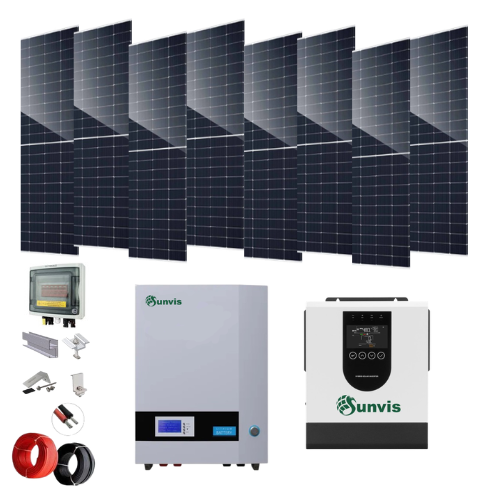
- System: 5 kW hybrid (panels + inverter + lithium battery), installed.
- System cost: ~KSh 450,000 (midpoint of the ~KSh 350,000–550,000 range).
- Generation: 5 kW × 5 peak sun hours × 0.8 losses ≈ 20 kWh/day ≈ ~600 units/month.
- Effective KPLC rate offset: ~KSh 26/unit (conservative all-in figure).
- Self-consumption: assume you use most of what you generate (typical for a hybrid home with a battery).
The calculation
- Monthly units offset: ~600 units (assume ~500 actually displace grid use after losses/usage patterns — a conservative trim).
- Monthly savings: 500 units × KSh 26 = ~KSh 13,000/month.
- Annual savings: KSh 13,000 × 12 = ~KSh 156,000/year.
- Payback: KSh 450,000 ÷ KSh 156,000 ≈ ~2.9 years for a heavy user; for a more typical home that offsets less, payback stretches to the commonly cited 4–6 years.
| If you offset… | Monthly saving (@ ~KSh 26/unit) | Approx. payback on ~KSh 450,000 |
|---|---|---|
| ~250 units/month | ~KSh 6,500 | ~5.8 years |
| ~350 units/month | ~KSh 9,100 | ~4.1 years |
| ~500 units/month | ~KSh 13,000 | ~2.9 years |
Illustrative only. Assumes a ~KSh 450,000 system, ~KSh 26/unit effective rate, and that solar displaces grid units one-for-one. Excludes financing costs, the time-value of money, eventual battery replacement, and future tariff changes. Real payback depends on your usage, tariff, self-consumption, and system; we model yours specifically in a quote. Not financial advice.
What happens after payback?
This is the part buyers underestimate. A quality solar system lasts 20–25+ years (panels), with the inverter (~10–15 years) and battery (lithium ~10–15 years) replaced once or so along the way. After the system pays for itself in the early years, the electricity it generates for the rest of its life is essentially free — so over 20 years, a system that cost a few hundred thousand shillings can return several times that in avoided bills, while also shielding you from future tariff increases. That combination of payback plus two decades of low-cost power is the real ROI story.
Beyond the numbers
- Outage protection. A hybrid system keeps you running during KPLC blackouts, a value that doesn’t show up in a payback sum but matters daily.
- Tariff hedge. Solar fixes much of your energy cost, protecting you from future rate rises.
- Property value. A quality solar installation can add to a property’s appeal.
- Lower emissions. Clean energy for homes and businesses with sustainability goals.

So, is solar worth it in Kenya?
For homes and businesses with monthly bills above roughly KSh 4,000–5,000 (about 150+ units), the answer is usually yes; Kenya’s high tariffs and strong sunlight produce payback periods of a few years, followed by many years of low-cost power. For very small users, payback is longer, and the backup/reliability benefits may matter more than the savings. The only way to know your number is to model your actual usage.
Get a personalised payback estimate → or call 0722 841 601 / 0702 068 376.
Frequently asked questions
What is the payback period for solar in Kenya?
For most homes, about 4 to 6 years, depending on your electricity use, tariff, and system cost. Heavy users with large bills can see payback in under 3 years; very small users take longer. After payback, the system provides low-cost power for the rest of its 20+ year life.
Is solar power worth it in Kenya?
For homes and businesses using more than ~150 units a month, generally yes. Kenya’s highly effective electricity rate (~KSh 26–29/unit all-in in 2026) and strong sunlight give solar a few-year payback and decades of low-cost power afterward, plus backup during outages.
How much can I save with solar each month?
It depends on how many units you offset. As an illustration, offsetting ~350 units a month at ~KSh 26/unit saves about KSh 9,100/month (~KSh 109,000/year). Your saving depends on your system size, usage, and tariff.
Does the battery affect payback?
Yes. A battery adds upfront cost (lengthening payback) but lets you use solar in the evening and provides outage backup. It will also need replacing over the system’s life, which a thorough payback estimate should account for.
Will rising KPLC tariffs change my payback?
Generally, in solar’s favour, if grid tariffs rise, each unit your solar offsets is worth more, shortening payback. Solar effectively hedges you against future increases. Tariffs are set by EPRA and can move, so treat any payback figure as an estimate.
Can I finance a solar system in Kenya?
Often, yes, several Kenyan banks offer solar loans, and some installers offer payment plans. Financing changes the cash-flow picture (interest costs versus immediate bill savings), so factor it into your payback. Ask about options when you request a quote.
Related reading
- Solar Installation Services in Kenya — full-service overview (pillar page).
- Cost of Solar Installation in Kenya (2026 Price Guide)
- Off-Grid vs Grid-Tie vs Hybrid Solar
- Solar Batteries in Kenya — the battery affects both cost and payback.