Eastern Bypass Mara House, Kenya
Quick Answer

A solar water heater uses the sun to heat water directly — cutting the cost of one of the biggest items on a Kenyan electricity bill. The two main types are flat-plate and evacuated-tube collectors, in sizes from about 100 to 300 litres. Prices typically run from about KSh 35,000 to KSh 195,000 depending on size and type, plus installation (indicative, 2026 — verify current). Kamatye supplies and installs solar water heaters across Nairobi, Kiambu and Machakos.

Heating water is one of the most expensive things you do with electricity — by common estimates it accounts for roughly a fifth of a typical household's energy bill. A solar water heater removes most of that cost by using free sunshine instead of the grid, and with Kenya's reliable sunlight it's one of the fastest-paying renewable investments a home or business can make. This guide explains the types available, how to size one, what they cost, the regulatory position in Kenya, and how to choose the right system.

Solar Water Heating vs Solar Electricity

It's a common point of confusion. Here's the clear difference between solar thermal (water heating) and solar PV (electricity generation).

This Page
☀️

Solar Water Heater (Solar Thermal)

Heats water directly with the sun's heat. Does not generate electricity and needs no inverter or battery. For hot water specifically, a dedicated solar water heater is usually the cheaper, more efficient route.

⭐ Best for reducing hot-water bills

Solar PV System (Solar Electricity)

Panels, inverter and batteries generate electricity that can power anything, including an electric heater. Many Kenyan homes use both: PV for power, a solar water heater for hot water.

⚡ Best for whole-home electricity

Types of Solar Water Heaters in Kenya

Two main collector types, and two circulation methods. The right combination depends on your climate, water pressure needs and budget.

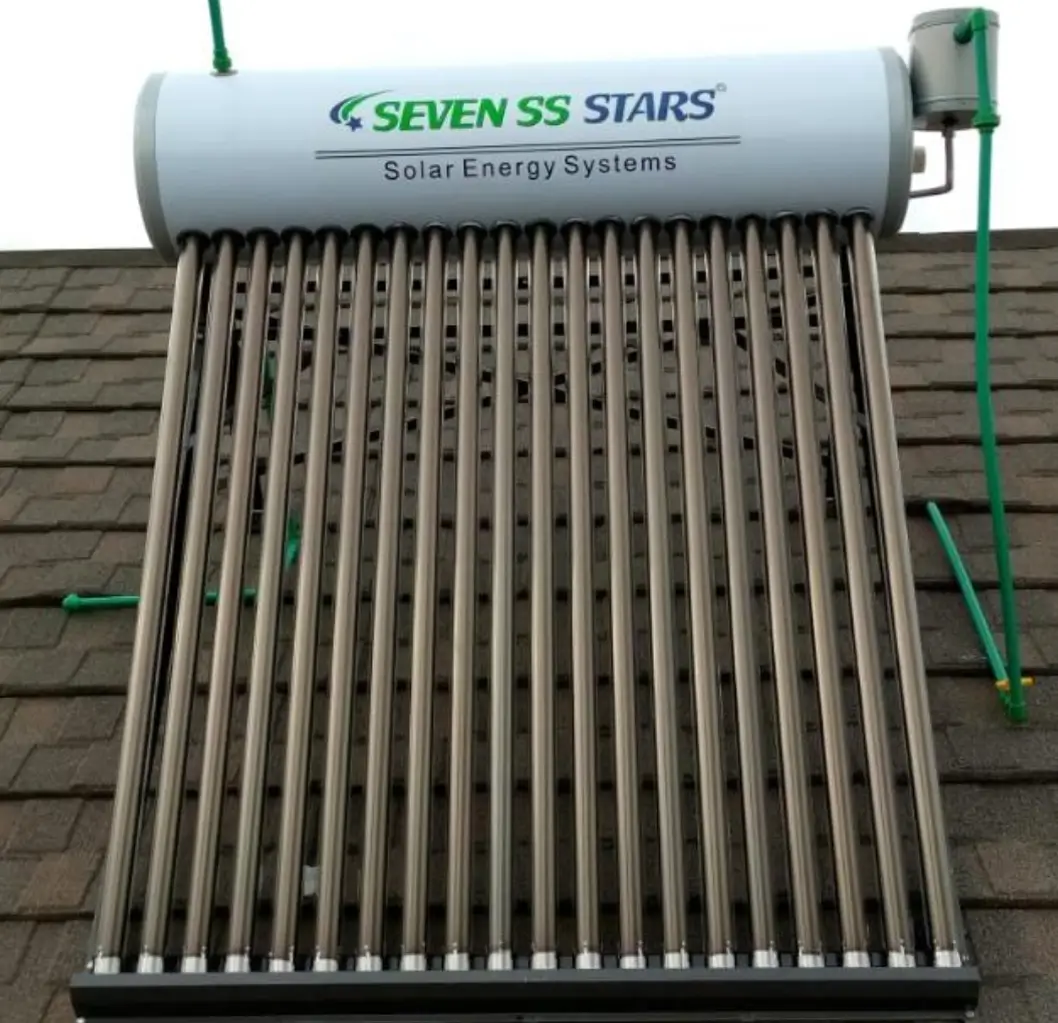
Seven SS Stars evacuated-tube solar water heater installed on a rooftop in Kenya
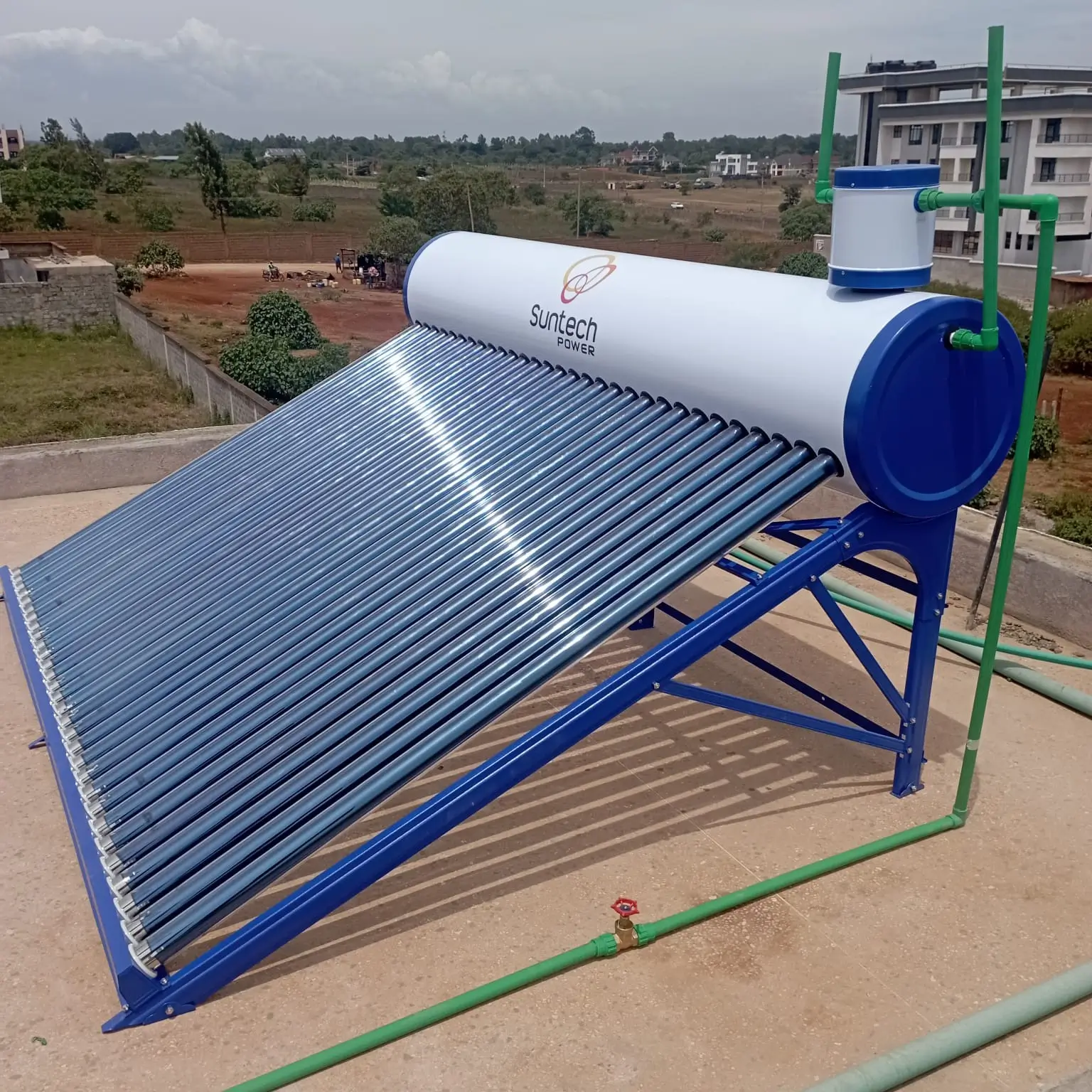
Evacuated-Tube Collector

Vacuum-insulated glass tubes trap heat like a thermos. Performs well even on overcast days and heats water faster — the preferred choice for most Kenyan homes.

Best for: Highland/cooler areas, faster heating, reliable performance
Trade-off: Higher cost than flat-plate
Suntech evacuated-tube solar water heater on rooftop in Kenya
Flat-Plate Collector

Copper tubes on a flat absorber plate collect solar heat. A cost-effective, durable option that performs best in consistently warm, sunny areas.

Best for: Warm sunny areas, budget-conscious buyers
Trade-off: Slightly less efficient on cool/overcast days

Flat-Plate vs Evacuated-Tube: Side-by-Side

Collector Type How It Works Best For Trade-Off
Flat-Plate Copper tubes on a flat absorber plate collect heat Warm, sunny areas; budget-conscious buyers Lower upfront cost; slightly less efficient on cool/overcast days
Evacuated-Tube Vacuum-insulated glass tubes trap heat (like a thermos) Cooler/highland areas; faster heating; most popular in Kenya Higher cost; performs well even on overcast days

Pressurized vs Non-Pressurized Systems

System Best For Note
Pressurized (Active) Urban homes, multi-storey buildings, showers Strong, stable pressure like an electric heater; typically costs more
Non-Pressurized (Passive) Simpler/lower-cost installations Relies on gravity flow; lower pressure

What Size Solar Water Heater Do You Need?

Solar water heaters are sized by tank capacity in litres, matched to your household's daily hot-water use. Choose too small and you run out of hot water; too large and you pay for capacity you never use.

🏠
100–150 litres

Small family / 1–2 bathrooms

🏡
250–300 litres

Larger households / heavy hot-water use

🏢
300+ litres

Hotels, institutions & commercial premises

Capacity Roughly Suits
100–150 L Small family / 1–2 bathrooms
200 L Typical family home (most popular)
250–300 L Larger households / heavy hot-water use
300 L+ Hotels, institutions, commercial premises
Tip: Households with multiple bathrooms or frequent hot showers need more capacity. We size from your actual household usage — tell us your household size for a free recommendation.

Solar Water Heater Prices in Kenya (2026)

Pricing depends on capacity, collector type, whether the system is pressurized, tank material, and brand. The ranges below are indicative Kenyan market prices — verify current pricing before purchase.

System Indicative Price (KES, 2026)* Notes
Flat-plate (entry-level) ~KSh 35,000 – 60,000 Budget option for warm areas
150 L System ~KSh 65,000 – 90,000 Small family
200 L System ~KSh 85,000 – 135,000 Typical family home
300 L / Premium Pressurized ~KSh 125,000 – 195,000 Large households / commercial

* Indicative ranges (2026) compiled from Kenyan suppliers. Prices vary by capacity, collector type, pressurization, tank material and brand, and change with exchange rates — verify current pricing. Installation typically adds KSh 8,000–30,000 depending on roof design and plumbing complexity.

Get an Itemised Quote →
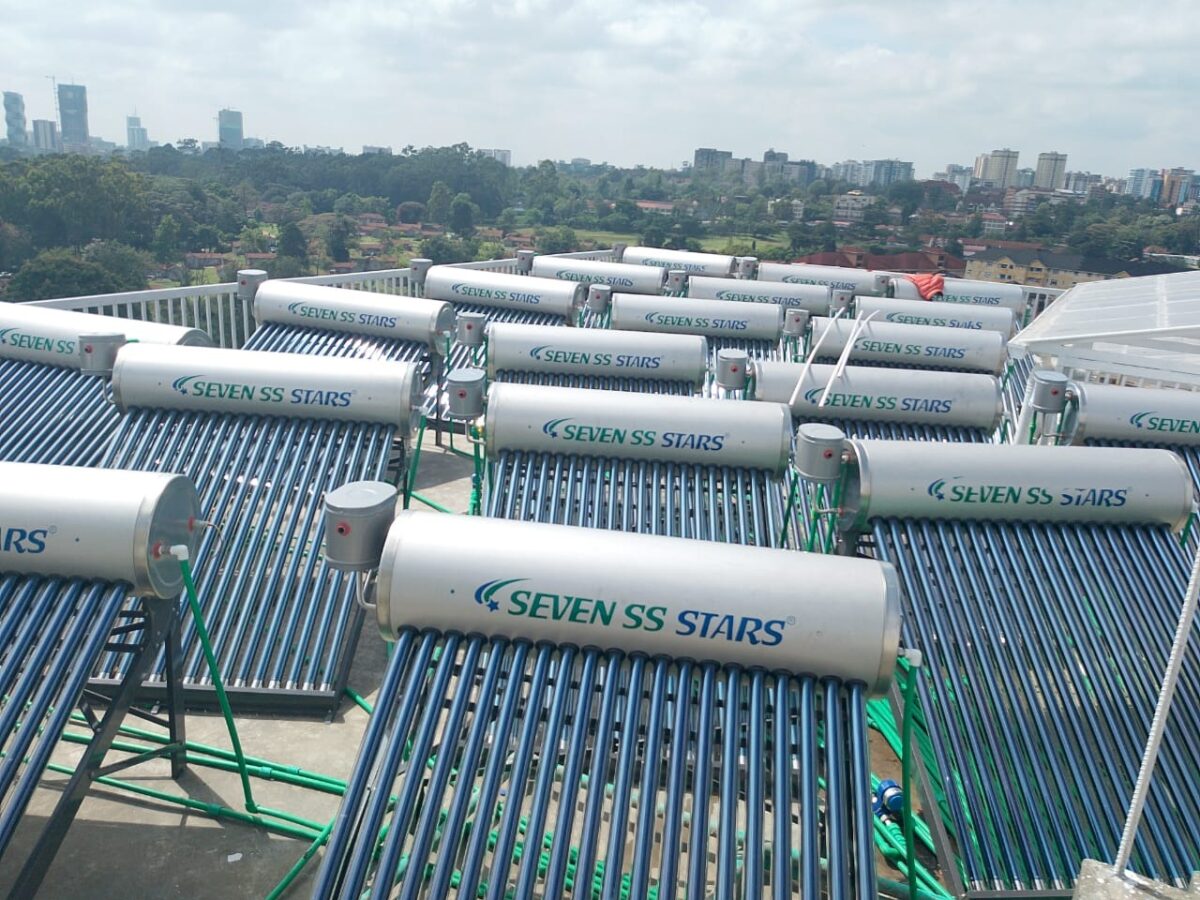
Multiple Seven SS Stars solar water heaters installed on a commercial rooftop in Nairobi, Kenya

Commercial solar water heater installation in Nairobi — Seven SS Stars systems

How Much Can a Solar Water Heater Save?

20–40%

Reduction in total electricity bill from water heating alone

One of the fastest-paying home energy upgrades

Because water heating is such a large share of a typical electricity bill, a solar water heater can meaningfully cut household costs. With a 10–15 year-plus system lifespan and Kenya's strong sunshine, payback is among the fastest of any home energy upgrade.

Actual savings depend on your usage — we estimate your specific saving as part of the quote rather than promise a fixed figure.

10–15+

Years of typical system lifespan with quality components

Are Solar Water Heaters a Legal Requirement in Kenya?

This is widely misunderstood — here is the accurate position as of 2026.

⚠️
Important: The 2012 Mandate Was Repealed
Many competitor pages incorrectly state this is current law — it is not

In 2012, Kenya gazetted the Energy (Solar Water Heating) Regulations, 2012, which required premises using more than 100 litres of hot water per day to install solar water heating. Those regulations faced implementation problems and were set aside — Parliament repealed the mandatory requirement in 2018 (the heavy fine was annulled as inconsistent with Kenyan law).

Since then, EPRA (the Energy and Petroleum Regulatory Authority) has published draft replacement regulations (a 2022 draft, and a Revised Draft in 2024) aimed at standardising manufacture, design, installation and licensing. As of this writing (May 2026), these are drafts and not in force.

Regardless of the legal position, installing a solar water heater remains a sound investment on cost and energy grounds. Where regulations do apply (especially for commercial premises), installation should be carried out by a suitably qualified, EPRA-recognised technician.

Regulatory position summarised from public reporting and EPRA published drafts (2012 regulations; 2018 repeal; 2022 and 2024 EPRA drafts). This is general information, not legal advice — confirm the current requirements for your specific premises with EPRA or a qualified professional. Status current as of May 2026; re-verify if reading later.

How to Choose the Right Solar Water Heater

Six factors that determine which system is right for your home or business.

  1. 1
    Match capacity to your household Around 200 L suits a typical family; size up for multiple bathrooms or heavy use. Oversizing wastes money; undersizing leaves you with cold water.
  2. 2
    Pick the collector for your climate Evacuated-tube for cooler/highland areas and faster heating; flat-plate as a budget option in consistently warm areas.
  3. 3
    Choose pressurized if you need strong shower pressure If you want strong, even shower pressure or have a multi-storey home, a pressurized (active) system is the right choice.
  4. 4
    Check the tank material Stainless steel (e.g. SUS304/316L) resists corrosion better than plastic, which matters particularly in hard-water areas of Kenya.
  5. 5
    Look at warranty & lifespan Quality systems last 10–15 years or more. Check the manufacturer warranty on both the collector and tank.
  6. 6
    Use a qualified installer Correct tilt angle, roof orientation and plumbing connections strongly affect performance. Poor installation can cut efficiency by 20–30%.

Why Buy Your Solar Water Heater from Kamatye

We don't just supply boxes — we recommend, install and support the right system for your home.

🎯

Right System for Your Home

We recommend collector type, capacity and pressurization based on your household and climate — not a one-size-fits-all box.

🏆

Quality Systems

We supply durable systems with stainless steel tanks and genuine manufacturer warranties, including Seven SS Stars and Suntech brands.

🔧

Professional Installation

Correct tilt, orientation and plumbing for maximum performance, installed by qualified technicians with EPRA compliance.

📍

Local & Reachable

Serving Nairobi, Kiambu and Machakos with responsive after-sales support when you need it.

🌍

Proven Experience

Completed projects include the Mageta Island Solar Project and numerous residential & commercial installations across Kenya.

💰

Transparent Pricing

Itemised quotes with no hidden costs. We show you exactly what you're paying for — system, installation and support included.

Request Your Free Solar Water Heater Quote →

Or call us: 0722 841 601  /  0702 068 376

Commercial installation — Seven SS Stars systems, Nairobi

Multiple Seven SS Stars solar water heaters on a commercial rooftop with Nairobi skyline in background

Frequently Asked Questions

Everything you need to know about solar water heaters in Kenya.

Indicatively (2026, verify current): entry-level flat-plate systems start around KSh 35,000, a 150 L system runs about KSh 65,000–90,000, a 200 L system about KSh 85,000–135,000, and large 300 L or premium pressurized systems up to about KSh 195,000. Installation typically adds KSh 8,000–30,000. Prices vary by brand, tank material and pressurization.
Evacuated-tube systems are generally more efficient, heat water faster, and perform better on overcast days — which is why they're the most popular residential choice in Kenya. Flat-plate systems cost less upfront and work well in consistently warm areas. For most Kenyan households, evacuated-tube offers better year-round performance.
Size by daily hot-water use. As a guide: 100–150 L for a small family, 200 L for a typical family home (the most popular choice), and 250–300 L+ for larger households or commercial premises. Contact us for a free sizing recommendation based on your actual household size.
Not currently for homeowners. The 2012 regulation that required premises using over 100 litres of hot water per day to install solar water heating was repealed by Parliament in 2018. EPRA has since published draft replacement regulations (2022 and 2024), but these are not yet in force. Confirm current requirements for your premises with EPRA or a qualified professional.
A quality system typically lasts 10–15 years or more. Stainless steel tanks (e.g. SUS304/316L) resist corrosion better and last longer, especially in hard-water areas. Regular maintenance — flushing the system and checking connections — maximises lifespan.
No. A solar water heater heats water directly with the sun's heat and does not generate electricity, so it needs no inverter or battery — unlike a solar PV power system. This is one reason solar water heaters are among the simplest and most cost-effective solar investments.
Yes — we supply and professionally install solar water heaters, serving Nairobi, Kiambu and Machakos. Our technicians handle correct roof mounting, tilt optimisation, plumbing connections and system commissioning. Request a quote to get started.

Ready to Cut Your Hot Water Bills?

Get a free, itemised quote for your home or business — no obligation, no pressure.

Chat with us