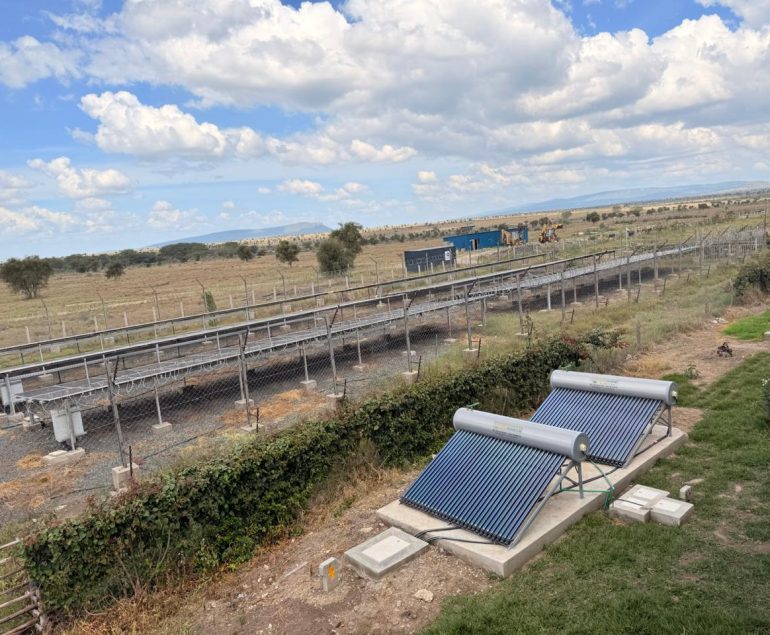


With climate change introducing intense weather volatility across East Africa, relying purely on rain-fed agriculture is no longer a viable business strategy for Kenyan farmers. Simultaneously, the skyrocketing cost of fuel makes traditional petrol and diesel-powered water generators an absolute cash drain. For an average one-acre farm, running a diesel generator can easily sap up to KSh 800 daily, or nearly KSh 24,000 monthly, just to keep crops hydrated during dry spells.
Transitioning to solar for farms in Kenya shifts agriculture from an unpredictable gamble to a highly controlled, high-yield commercial enterprise. By eliminating recurring fuel expenses, agribusinesses unlock immediate capital to reinvest in high-quality seeds, fertilizers, and lucrative cash crops.
The Economics: Diesel vs. Solar Power for Irrigation
When evaluating an energy upgrade, many agribusiness owners hesitate due to the upfront capital requirements. However, a comparative look at the financial lifecycle reveals that alternative methods rapidly eat away at your hard-earned profit margins.
| Financial Parameter | Traditional Diesel Pumping | Solar-Powered Farm Systems |
| Initial Capital Expense | Low (KSh 20,000 – KSh 40,000) | Moderate to High (KSh 60,000 – KSh 350,000) |
| Monthly Fuel & Power Cost | KSh 15,000 – KSh 25,000 | KSh 0 (Sunlight serves as free fuel) |
| System Lifespan | 2 to 5 years (High mechanical wear) | 10 to 25 years (Minimal moving parts) |
| Average Payback Period | Ongoing operational liability | 18 to 36 Months |
Pro-Tip for Agribusiness Operators: While a fossil-fuel generator operates as an ongoing operational liability, investing in solar technology shifts your energy profile into a fixed asset that pays for itself within two to three years.
Top Productive Applications of Solar on Kenyan Farms
1. Solar Water Pumping & Drip Irrigation
Water management is the core pillar of crop success. Modern solar water pumps available in both surface and submersible configurations draw water directly from deep boreholes, rivers, or dams into elevated holding tanks. By combining a solar pump with a low-pressure drip irrigation network, water is delivered straight to the crop root zones via gravity. This maximizes water use efficiency and allows for a continuous third growing season when market prices peak due to widespread supply shortages
2. Off-Grid Agro-Processing and Poultry Lighting
For farms situated far from the national grid, solar energy handles everything from egg incubation to processing machinery. Reliable solar arrays maintain accurate thermal settings for chicks, reducing mortality rates, while driving small-scale milling and sorting equipment without relying on unpredictable rural power lines or expensive grid connections.
3. Solar Cold Storage Solutions
Post-harvest loss remains a massive bottleneck for fresh produce exporters and horticulture farmers in counties like Meru, Nyandarua, and Nakuru. Off-grid solar cold hubs allow farmers to preserve perishable goods right at the farm gate, empowering them to bypass predatory middlemen and wait for optimum market prices.
Sizing and Cost Expectations for Kenyan Farms
The total installation cost for solar farms in Kenya depends significantly on your acreage, the vertical lift (pump head) required from your water source, and your total daily water demand.
- Small-Scale Kits (0.5 Acre): Ranging from KSh 60,000 to KSh 150,000, these systems are perfect for open-field vegetables, shallow wells, or smaller greenhouses.
- Commercial Configurations (1 to 5 Acres): Ranging from KSh 180,000 to KSh 1,000,000+, these high-output setups utilize heavy-duty submersible pumps (often 3HP to 5HP) powered by robust monocrystalline solar plate arrays to move massive volumes of water.
By working with certified solar technicians in Kenya to design your configuration, you ensure your solar farm investment is perfectly calibrated to protect your crops, cut down overhead costs, and maximize your multi-season yields.