Residential Wiring & Installation
Complete house wiring, rewiring, distribution boards, sockets, lighting and safety systems for homes and estates.
KPLC will not mount your meter without an EPRA-approved Completion Certificate. Kamatye handles the full compliance pathway — from filing the Commencement of Work Notice through to your signed certificate for grid connection.
Kamatye Enterprise provides EPRA-licensed electrical installation across Nairobi, Kiambu and Machakos, Kenya. Our process follows the legally mandated compliance pathway: a Commencement of Work Notice filed with EPRA before work begins, a certified physical installation to Kenyan Wiring Regulations (conduit, cable pulling, distribution boards, copper earthing), and a signed EPRA Completion Certificate — the document Kenya Power (KPLC) requires before mounting your meter and connecting to the grid. We cover residential, commercial and industrial electrical work — from single-phase house wiring to three-phase industrial power systems.
Electrical work in Kenya is regulated — and getting it wrong does not just risk fire and equipment damage; it blocks your KPLC grid connection. Kenya Power will not mount a meter on your property without a valid EPRA Completion Certificate signed by a licensed contractor. For property developers, homeowners and site managers, this is the regulatory bottleneck that stalls projects. Kamatye's role is to eliminate that bottleneck: we are EPRA-licensed, we file the Commencement of Work Notice before we start, we build to standard, and we hand you the signed certificate that gets KPLC moving.
Kenya Power (KPLC) will not energise a property without an EPRA-approved Completion Certificate from a licensed contractor. Most developers hit this wall too late. Here is exactly how Kamatye navigates the full compliance process on your behalf — from day one to grid connection.
A Commencement of Work Notice must be lodged with EPRA by a licensed electrical contractor before any physical installation begins. This is a legal requirement under the Energy Act and EPRA regulations. Skipping this step permanently invalidates your path to a certifiable completion and a KPLC connection.
→ Kamatye files the Commencement of Work Notice with EPRA on your behalf before our team sets foot on site.
Our licensed electricians carry out the complete installation: laying heavy-gauge conduits (20mm–32mm PVC/metallic), pulling copper cables (1.5mm² lighting circuits through to 16mm²+ three-phase feeders), fitting consumer units and distribution boards, installing copper earth mats and earth rods, connecting single-phase or three-phase circuits, and fitting MCBs, RCDs and surge protection devices — all to EPRA standards and the Kenyan Wiring Regulations.
→ Every component is to KEBS-approved specification. Correct materials are what make an installation certifiable and insurable.
After full testing and inspection — insulation resistance, earth loop impedance and RCD trip-time verification — our EPRA-licensed contractor signs and issues the EPRA Completion Certificate (Wiring Certificate). This document is presented to Kenya Power, who can then proceed to mount your single-phase or three-phase meter and energise the property. Without this certificate, KPLC cannot proceed — full stop.
→ We hand you the signed certificate and walk you through the KPLC submission process.
Developer note: The Commencement of Work Notice must be filed before any physical work begins — not after. If your project has already started without it, there are remedial steps. Contact Kamatye to discuss your specific situation before proceeding.
We handle electrical projects across residential, commercial and industrial settings — from a single distribution board to a full industrial power system.
Complete house wiring, rewiring, distribution boards, sockets, lighting and safety systems for homes and estates.
Offices, retail, hospitality and institutional buildings — power distribution, lighting design and backup integration.
Power systems for factories and plants: three-phase distribution, machinery connections, motor controls and heavy-duty cabling.
Supply, installation and upgrading of consumer units and distribution boards with proper circuit protection devices.
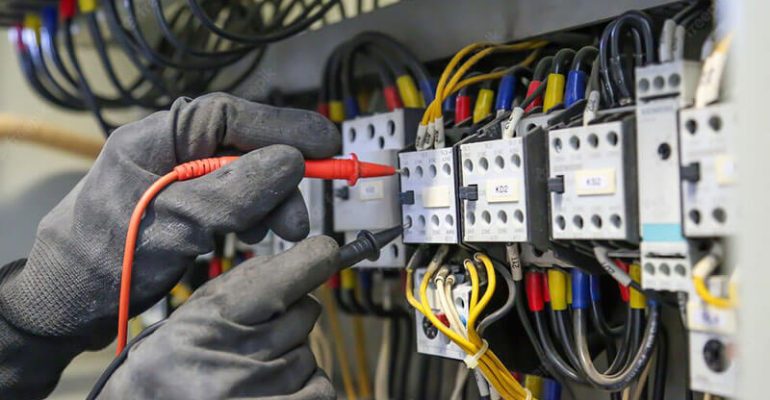
Verifying installations are safe and compliant using proper test instruments — insulation resistance, earth and loop impedance.
Diagnosing and fixing faults, and preventive maintenance programmes to avoid downtime and equipment damage.
Connecting generators and integrating with solar systems — seamlessly designed under one roof.
The EPRA-signed Completion Certificate that Kenya Power requires to mount your meter and connect you to the grid — issued after full testing and inspection.
The mandatory EPRA notification that must be filed before any electrical installation work begins — a legal prerequisite for obtaining a valid completion certificate.
One team covering all sectors — from single-phase home wiring to full industrial three-phase power systems.
| Sector | Typical Work |
|---|---|
| Homes & Estates | New wiring, rewiring, distribution boards, lighting, safety & surge protection |
| Commercial & Institutional | Offices, schools, health facilities, retail — power distribution, lighting, backup power |
| Industrial | Three-phase power, machinery connections, motor control, heavy cabling, plant wiring |
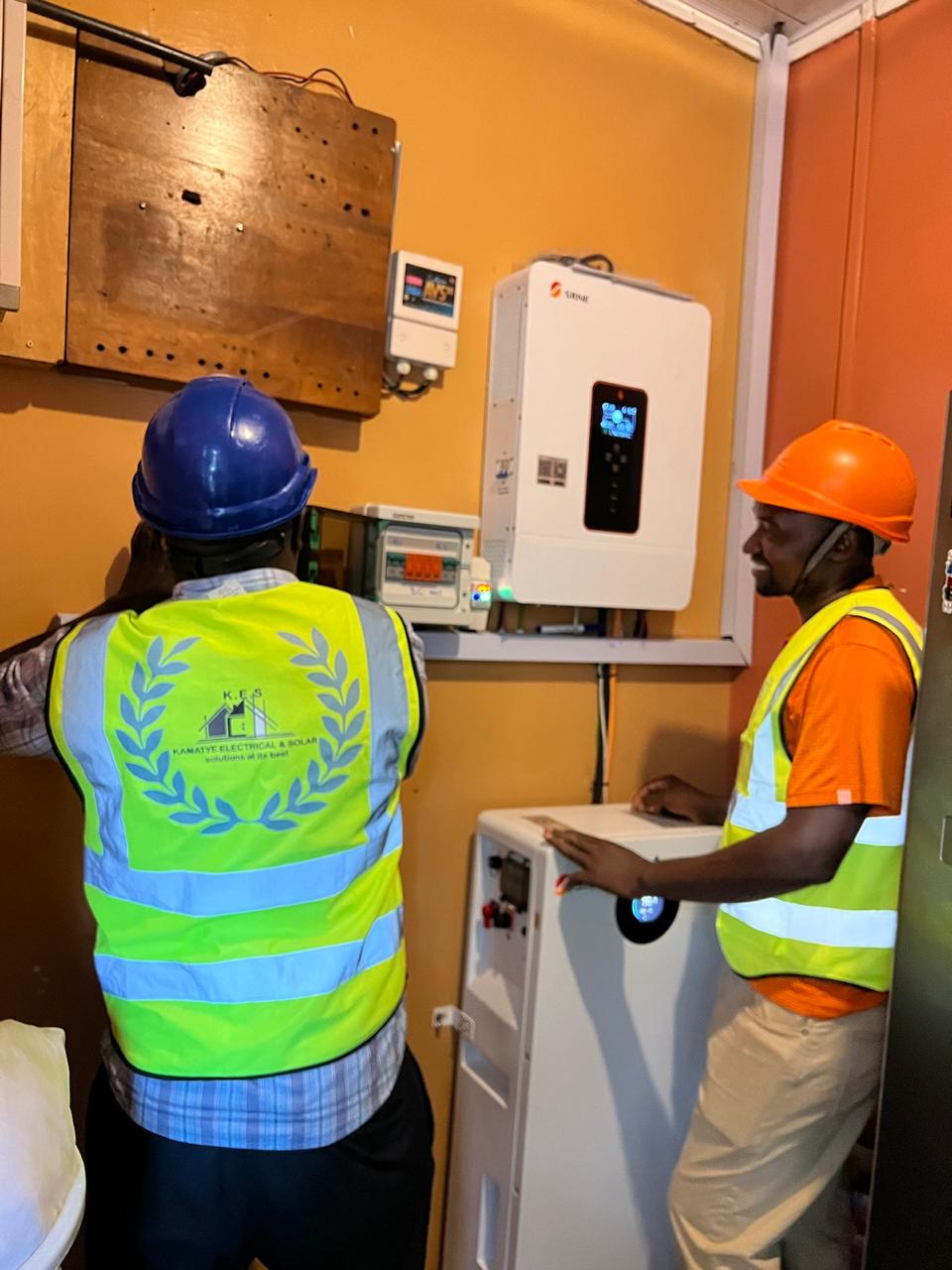
Industrial and commercial installations demand more than domestic wiring — they involve higher loads, three-phase power, motor control, and strict safety and compliance requirements.
Our team handles the design and installation of robust power systems for factories, plants and commercial premises, including distribution, machinery connections, control systems and protective devices, with full testing and certification on completion.
Correct industrial installation protects expensive equipment, reduces downtime, and keeps your operation safe and compliant.
Discuss Your Industrial Project →Proper specification is what makes an installation testable, certifiable, and insurable. These are the materials and hardware we build with — all to Kenyan Wiring Regulations and KEBS standards.
Electrical installation cost varies widely with scope. A meaningful figure only comes from assessing your project. The main cost drivers are:
A single-room rewire versus a full house, commercial fit-out or industrial plant — scope drives the price.
Rewiring an occupied building can be more complex and time-consuming than new-build wiring.
Sockets, lighting points, dedicated circuits and distribution boards all add to the scope.
Industrial/commercial three-phase systems require heavier components and specialist installation.
Cable type, run length, conduit and quality of fittings and protective devices.
Proper inspection, testing and certification — mandatory for safe and insurable installations.
Rather than quote a misleading headline price, we assess your project and provide a clear, itemised quote. No surprises.
Request a Free Assessment & Quote →In Kenya, electrical work is regulated by the Energy and Petroleum Regulatory Authority (EPRA). EPRA licenses both individual electricians (electrical workers) and electrical contractors across different classes, and a contractor must hold the licence class appropriate to the scale of work being carried out.
EPRA electrical contractor and worker classes:
Licensed contractors are also required to use proper test instruments — such as insulation resistance testers, earth resistance testers and earth loop impedance testers — to verify that installations are safe before handover.
What this means for you: always use an EPRA-licensed electrician or contractor. Unlicensed work risks your safety, your insurance cover, and compliance — and is a false economy if the work must be redone. Kamatye's electrical work is carried out by EPRA-licensed personnel. [VERIFY: insert Kamatye's EPRA contractor class and licence number before publishing.]
A clear, legally compliant process from first contact to KPLC grid energisation — so you know exactly what to expect and nothing falls through the cracks.
We visit your property, assess load requirements (single-phase or three-phase), circuit count and cable routes — so the design and quote are accurate from the start.
Before a single conduit is laid, we file the mandatory Commencement of Work Notice with EPRA. This legal step protects you and ensures the completed work can be certified.
Physical installation: conduit laying, copper cable pulling, consumer unit and distribution board fitting, copper earth mat installation, single- or three-phase wiring — all to Kenyan Wiring Regulations.
Full verification using EPRA-approved instruments: insulation resistance testing, earth loop impedance, RCD trip-time checks and continuity testing across all circuits.
Our licensed contractor signs and issues the EPRA Completion Certificate (Wiring Certificate) — the document Kenya Power requires before mounting your meter and connecting to the grid.
We hand you the signed certificate, guide you through the KPLC submission, and provide full installation documentation. Ongoing maintenance programmes available.
We are not a general contractor dabbling in electrical. Electrical installation and solar are our two core service lines — everything we do is built on compliance, safety and quality.
Work carried out by EPRA-licensed electricians to Kenyan wiring standards. [VERIFY: EPRA contractor class & licence no.]
One team for homes, commercial fit-outs and heavy industrial power systems — no job too small or too large.
Proper testing, certification and protective devices on every installation — no shortcuts, ever.
[VERIFY: project count & years], including the Mageta Island Solar Project — complex, off-grid electrical and solar work.
Electrical and solar under one roof — ideal for backup integration, solar hybrid and generator tie-in projects.
Serving Nairobi, Kiambu and Machakos with responsive support. [VERIFY full address + wider coverage]
Ready to get started? Request a free assessment or call us directly.
Electrical installation often works alongside these other Kamatye services.
Common questions about electrical installation in Kenya, costs and licensing.
Yes. Electrical work in Kenya is regulated by EPRA, and installations should be carried out by an EPRA-licensed electrician or contractor of the appropriate class. Using unlicensed labour risks your safety, your insurance and compliance, and often costs more if the work must be redone.
It depends heavily on scope — property size, new wiring versus rewiring, number of circuits and points, single- or three-phase, cable runs, and testing. Because costs vary so widely, we provide an itemised quote after a site assessment rather than a misleading headline price. Request a free quote →
Yes. We design and install industrial power systems including three-phase distribution, machinery connections, motor controls and heavy-duty cabling, with testing and certification on completion.
Yes. We test and inspect all installations using proper instruments — including insulation resistance and earth loop impedance testers — and certify them safe and compliant before handover.
Yes — electrical and solar are both core services for us, which makes us well placed to integrate backup power, generators and solar systems into your electrical installation seamlessly.
Yes — we serve Nairobi, Kiambu and Machakos. [VERIFY any wider coverage before publishing.]
A KPLC wiring certificate is the informal name for the EPRA Completion Certificate (Wiring Certificate) — the official document signed by a licensed electrical contractor confirming that an installation has been completed to the required standards and has passed all tests. Kenya Power (KPLC) requires this certificate before they will mount a meter and energise any new or rewired property. Without it, your application for a grid connection will not proceed regardless of how good the physical installation is.
A Commencement of Work Notice is a mandatory notification that a licensed electrical contractor must file with EPRA before any physical electrical installation work begins. It is a legal requirement under Kenya's Energy Act and EPRA electrical regulations. Filing it after the fact — or skipping it entirely — invalidates the installation record and prevents you from obtaining a valid Completion Certificate, which in turn blocks your KPLC meter application. Kamatye files the notice on your behalf as the first step in every project.
Wiring a standard 3-bedroom house in Kenya depends on several variables: the number of sockets, lighting points and circuits; whether it is new-build or rewiring of an occupied property; the quality of components (consumer unit, MCBs, RCDs, cables); conduit specification; and the earthing system. Additional compliance costs — Commencement Notice filing, testing instruments, and the Completion Certificate — are also part of a legitimate installation. Because the range is wide, Kamatye provides a detailed itemised quote after a free site visit rather than a price that could mislead you. Request a free assessment →
Have a question not covered here? Get in touch — we're happy to help.
Request Your Free Electrical Quote →