

To choose a solar water heater in Kenya, pick the collector type (evacuated-tube for most homes, flat-plate for budget/warm areas), decide pressurized vs non-pressurized, then size it by household – roughly 30–50 litres of hot water per person per day, so a typical family suits a 200-litre system. Prices run from about KSh 35,000 to KSh 195,000 plus installation (indicative, 2026).
Get a sized recommendation for your home →
A solar water heater is one of the fastest-paying solar investments in Kenya. Heating water is a big chunk of the typical electricity bill, and the sun does it for free. But systems vary in collector type, circulation, size, and build quality, and the wrong choice means weak pressure, not enough hot water, or a tank that corrodes early. This guide walks you through the decision step by step, with a simple way to size the system to your household.
For types, prices, and the regulatory position in full, see solar water heaters in Kenya. This is the buying-and-sizing companion.
First, a solar water heater is not a solar power system
A quick clarification that saves confusion. A solar water heater (solar thermal) heats water directly with the sun’s heat; it generates no electricity and needs no inverter or battery. A solar power system (panels + inverter + battery) generates electricity. For hot water specifically, a dedicated solar water heater is usually the cheaper, more efficient choice. Many Kenyan homes run both.
Step 1: Choose your collector type
This is the biggest performance decision. The two options:
| Collector | How it works | Best for | Trade-off |
|---|---|---|---|
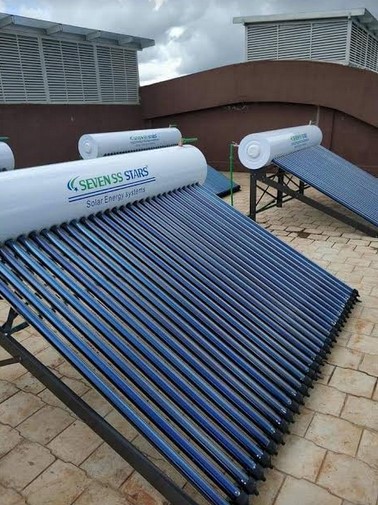
| Evacuated-tube | Vacuum-insulated glass tubes trap heat (like a thermos) | Most homes; cooler/highland areas; faster heating | Costs more; performs well even on overcast days |
| Flat-plate | Copper tubes on a flat absorber plate | Warm, sunny areas; tighter budgets | Lower cost; a little less efficient in cool/cloudy weather |
For most Kenyan homes, evacuated-tube is the popular choice because it heats faster and keeps working on cloudy days, useful during long-rain periods. Flat-plate remains a solid, lower-cost option in consistently warm areas.
Step 2: Decide on pressurized or non-pressurized
This determines your water pressure at the tap and shower.
- Pressurized (active): delivers strong, even pressure like an electric heater — best for urban homes, multi-storey buildings and good showers. Costs a bit more.
- Non-pressurized (passive) relies on gravity flow, so pressure is lower. Simpler and cheaper, suitable where high pressure isn’t essential.
If you want a proper shower, choose pressurized – it’s the most common complaint when people buy on price alone.
Step 3: Size it to your household
Solar water heaters are sized by tank capacity in litres, matched to how much hot water your household uses in a day. A practical rule of thumb is about 30–50 litres of hot water per person per day (more if you take long showers or baths, less for light users).
| Household | Guide capacity | Notes |
|---|---|---|
| 1–2 people | 100–150 L | Small family / couple |
| 3–4 people | 200 L | Typical family home (most popular) |
| 5–6 people | 250–300 L | Larger household |
| 7+ / commercial | 300 L+ | Big households, hotels, institutions |
Tip: size for your busy-morning demand, not your average. If everyone showers within an hour or two, you need enough stored hot water to cover that peak. Undersize and you run cold; oversize and you pay for capacity you never use. Tell us your household size for a free recommendation.
Step 4: Check the build quality
- Tank material: stainless steel (e.g., SUS304 or SUS316L) resists corrosion far better than cheaper coated steel or plastic — important in hard-water areas, which are common in parts of Kenya.
- Insulation: good tank insulation keeps water hot overnight, so you still have hot water in the morning.
- Tube/collector quality: better glass and coatings absorb more heat and last longer.
- Backup heating element: many systems include an electric element for cloudy spells — useful, but it should be a backup, not the main source.
- Warranty: quality systems carry multi-year warranties; longer is a sign of confidence.
Step 5: Get the installation right
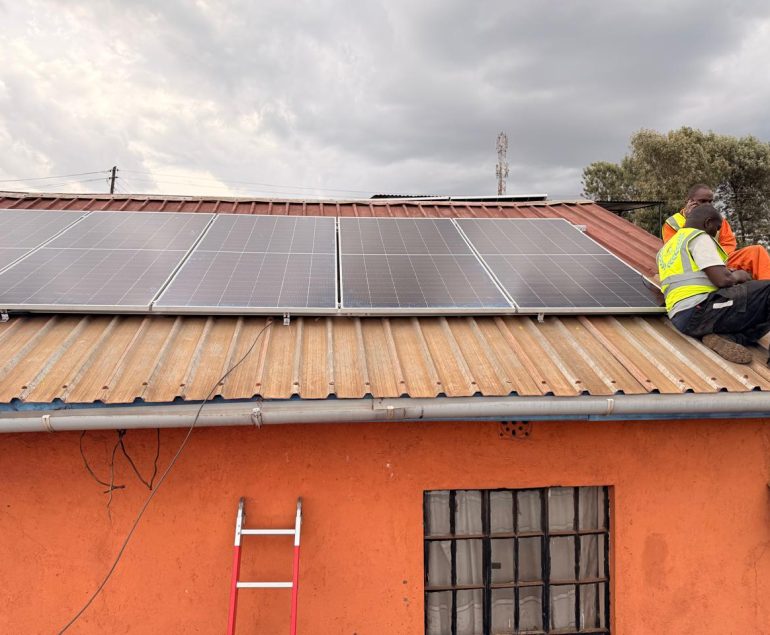
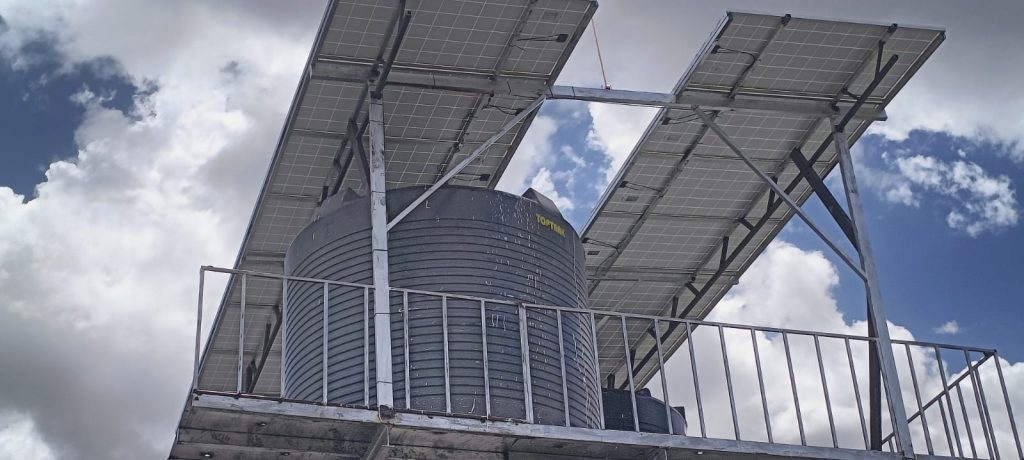
A good system installed badly underperforms. The collector should face roughly true north in Kenya, tilted appropriately, and sited to avoid shading. Plumbing must be correct so the system fills, circulates, and drains properly, and the tank must be well supported. This is why professional installation matters — and where many cheap deals fall down. Solar water heating installation should be done by a suitably qualified technician.
What it costs
Indicative 2026 Kenyan market prices (system only; verify current): entry-level flat-plate from ~KSh 35,000; 150 L ~KSh 65,000–90,000; 200 L ~KSh 85,000–135,000; 300 L / premium pressurized up to ~KSh 195,000, with installation typically adding KSh 8,000–30,000. For the full price breakdown see the solar water heaters page.
Indicative ranges (2026) from Kenyan suppliers vary by capacity, collector type, pressurization, tank material, and brand – verify current pricing.
Are solar water heaters required by law in Kenya?
Not currently for homeowners — and this is widely misreported. The 2012 regulation that required premises using over 100 litres of hot water per day to install solar water heating was repealed by Parliament in 2018. EPRA has since published draft replacement regulations (2022 and 2024), but these are not yet in force. So you’re free to choose solar water heating on its own merits – which, on cost and energy grounds, are strong. (Fuller detail on the solar water heaters page.)
General information, not legal advice; confirm current requirements for your premises with EPRA or a qualified professional. Status as of 2026, re-verify if reading later.
Common buying mistakes to avoid
- Buying on price alone and ending up with weak pressure or a too-small tank.
- Undersizing for a busy household, so you run out of hot water in the morning.
- Ignoring tank material in hard-water areas — cheap tanks corrode and fail early.
- Skipping pressurized when you actually want a strong shower.
- Poor installation — wrong orientation, shading or plumbing that cripples performance.
Get the right system, properly sized
Tell us your household size, your water pressure needs and your location, and we’ll recommend the right collector type, capacity and system — and install it correctly.
Request your free solar water heater quote → or call 0722 841 601 / 0702 068 376.
Frequently asked questions
What size solar water heater do I need in Kenya?
Allow roughly 30–50 litres of hot water per person per day. So 1–2 people suit a 100–150 L system, a typical 3–4 person family suits 200 L, and 5–6 people suit 250–300 L. Size for your busy-morning demand, not your daily average.
Which is better: evacuated-tube or flat-plate?
Evacuated-tube heats faster and perform better on cloudy days, making it the popular residential choice in Kenya. Flat-plate costs less and works well in consistently warm areas. Both are good when correctly sized and installed.
Do I need a pressurized solar water heater?
Choose pressurized if you want strong, even water pressure – especially for showers or multi-storey homes. Non-pressurized systems are cheaper but deliver lower, gravity-fed pressure.
How much does a solar water heater cost in Kenya?
Indicatively (2026, verify current): entry flat-plate from ~KSh 35,000, a 150 L system ~KSh 65,000–90,000, a 200 L system ~KSh 85,000–135,000, and large/premium systems up to ~KSh 195,000, plus KSh 8,000–30,000 installation.
Do solar water heaters work on cloudy days?
Yes, though output drops. Evacuated-tube systems cope better with overcast conditions, and many systems include a backup electric element for prolonged cloudy spells, so you always have hot water.
Are solar water heaters mandatory in Kenya?
Not currently for homeowners. The 2012 rule requiring premises using 100+ litres of hot water per day to install solar water heating was repealed in 2018; EPRA’s draft replacements (2022, 2024) are not yet in force. Confirm current requirements with EPRA for your premises.
Related reading
- Solar Water Heaters in Kenya — types, prices and regulation (pillar page).
- Solar Installation Services — full solar power systems (a different solution to solar water heating).
- Cost of Solar Installation in Kenya (2026 Price Guide)