
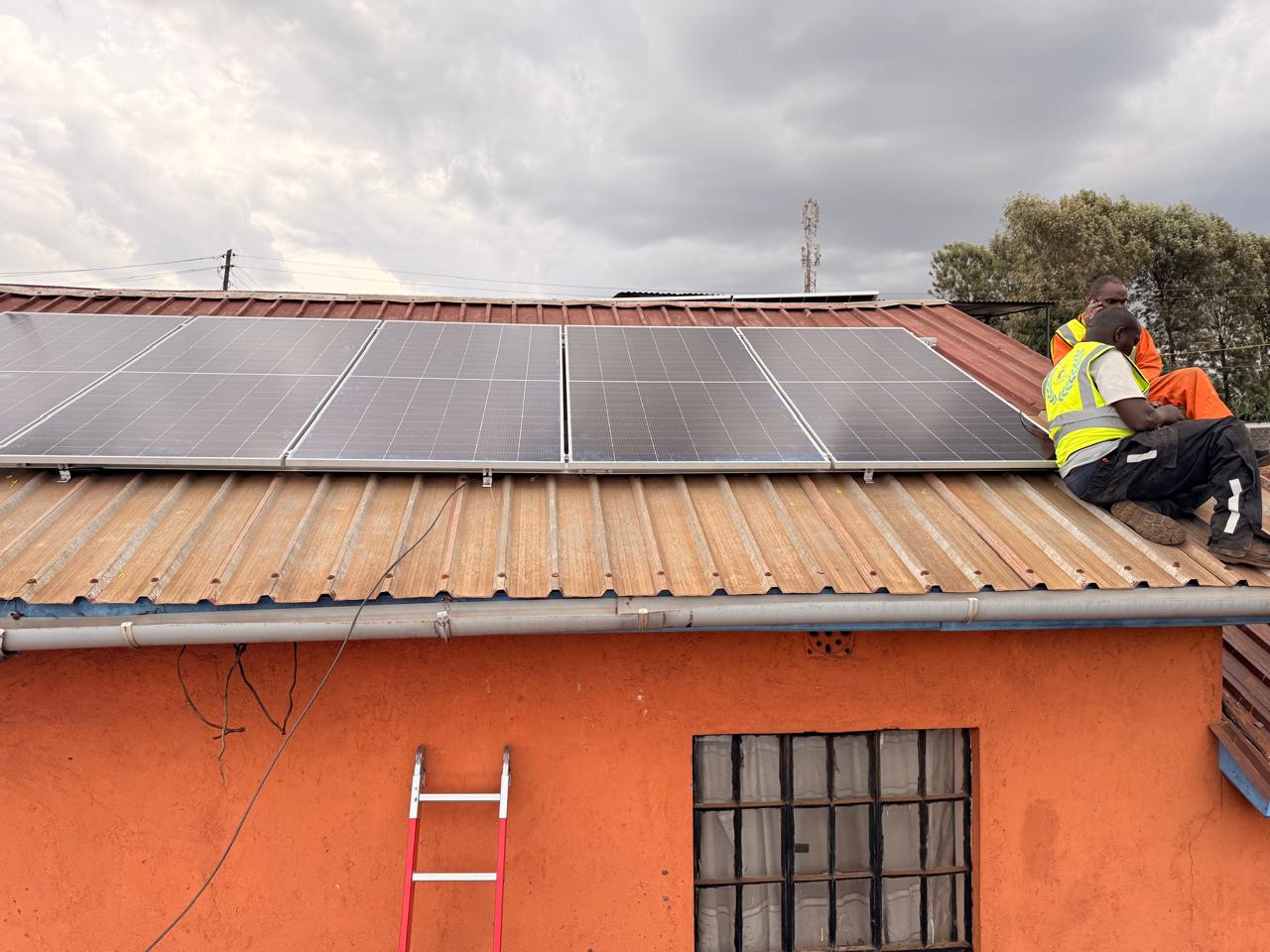
A complete home solar installation in Kenya typically costs between KSh 120,000 for a small 2 kW system and KSh 550,000 for a 5 kW hybrid system with battery backup, with commercial systems running into the millions (indicative market ranges; 2026; verify current). The biggest cost drivers are system size and battery choice. A site assessment gives the only accurate figure for your home.
Get an itemized quote for your home →
“How much does solar cost in Kenya?” is the first question almost every buyer asks — and the honest answer is “it depends,” because the price is driven by your energy use, the system type, and especially the battery. This guide breaks the cost down component by component, gives indicative price ranges by system size for 2026, and explains what makes the price go up or down, so you can budget realistically and spot an over- or under-priced quote.
For the full service overview, see our solar installation services page. This guide is the detailed cost companion.
Solar installation cost by system size (2026)
The single biggest price driver is system size (kW), which is set by how much electricity you use. These are indicative complete-system ranges, panels, inverter, battery, mounting, and installation gathered from Kenyan installers in 2026. Verify current pricing with a quote.
| System size | Typically powers | Indicative complete cost (KES, 2026)* |
|---|---|---|
| 2 kW | Lights, TV, Wi-Fi, phone charging, small fridge | ~KSh 120,000 – 200,000 |
| 3 kW | 3-bedroom home: fridge, TV, lights, fans, washing machine, pump | ~KSh 190,000 – 300,000 |
| 5 kW hybrid (most popular) | Whole home + backup: multiple appliances, office equipment | ~KSh 350,000 – 550,000 |
| 5–10 kW | Large home / small business | ~KSh 600,000 – 1,200,000 |
| 15 kW+ (commercial) | Businesses, institutions, and light industry | from ~KSh 2,800,000, scaling with demand |
* Indicative ranges (2026) compiled from multiple Kenyan installers including Ecolink Power Systems, Solar City, MVE Solar Solutions and Aqua Hub. Actual cost varies with battery capacity, component brands, roof type and site verify with a quote. Ranges assume a hybrid system with battery for the 3 kW size and above; a grid-tie system without a battery costs less.
Where the money goes: cost breakdown by component
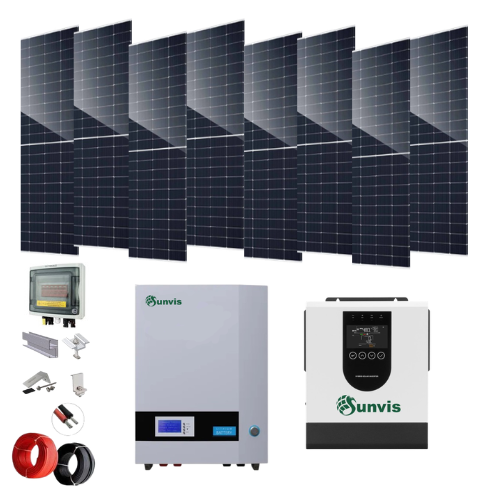
Understanding the components helps you read a quote and see where quality matters. For a typical residential hybrid system, the rough split is:
| Component | What it does | Indicative cost (KES, 2026)* |
|---|---|---|
| Solar panels | Generate the electricity | ~KSh 8,000 – 12,000 per panel (× number needed) |
| Battery (the big variable) | Stores energy for night/outages | Lithium ~KSh 60,000 – 120,000 per 5 kWh |
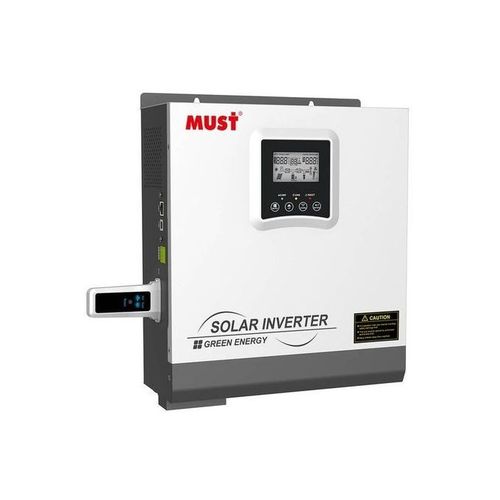
| Inverter | Converts DC to AC, manages backup | 5 kW hybrid ~KSh 80,000 – 150,000 |
| Mounting structure | Secures panels to the roof | ~KSh 20,000 – 55,000 |
| Cabling, breakers & protection | Wiring, isolators, surge protection | ~KSh 20,000 – 45,000 |
| Installation labour | Professional fitting & commissioning | ~KSh 25,000 – 70,000 |
The headline most buyers miss: the battery is usually the highest single cost and the biggest variable. It’s also where the cheapest-now choice (lead-acid) can cost more over time than lithium, because lead-acid is replaced far more often. See our guide to solar batteries in Kenya and Lithium vs Lead-Acid Solar Batteries in Kenya
What makes the price go up or down?
- System size (kW): the biggest driver; set by your electricity consumption.
- Battery type & capacity: lithium costs more upfront than lead-acid but lasts roughly three times as long; more backup hours means more storage.
- System type: a grid-tie system (no battery) is the cheapest; a hybrid (battery + backup) costs more; off-grid is the most.
- Component brands: Tier-1 panels and reputable inverters cost ~15–20% more but carry real warranties and last longer.
- Roof type & site: sloped iron roofs are simpler; flat concrete or multi-storey roofs need extra structural/mounting work.
- Location & access: transport and labour rates vary between urban and rural sites.
- Cable runs & complexity: long runs, multiple battery banks, or integrating with existing backup add cost.
Why hybrid systems cost more than grid-tie — and why most homes still choose them
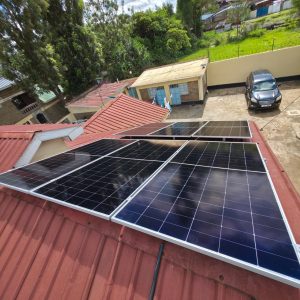
A grid-tie system (panels + inverter, no battery) is the cheapest way to cut your daytime bill, but it switches off during a KPLC outage. A hybrid system adds a battery so you keep power during blackouts and can use stored solar in the evening at a higher upfront cost. For most Kenyan urban and peri-urban homes facing regular outages, the hybrid premium is worth it, which is why it’s the most popular 2026 choice. If you only want bill savings and have a stable supply, grid-tie can make sense. (More on this in Off-Grid vs Grid-Tie vs Hybrid Solar
Is solar worth the cost in Kenya?
For most homes and businesses using more than about 150 units of electricity a month, yes. With KPLC domestic tariffs in the region of KSh 19–25 per unit (approximate, before surcharges and VAT — verify current), a properly sized hybrid system commonly pays for itself in around 4–6 years and then generates electricity at near-zero cost for the remaining 15–20+ years of its life. The exact payback depends on your usage, tariff and system. We work out an estimated payback for your specific case as part of the quote — see also our deeper guide, Solar ROI & Payback Period in Kenya
Savings and payback are estimates that depend on your consumption, tariff and system, and on future tariff changes — they are not guarantees.
How to keep your solar cost down (without buying junk)
- Size it to your real usage — an energy audit prevents paying for capacity you don’t need.
- Start smaller and expand — many hybrid systems let you add panels or battery capacity later.
- Don’t cut corners on the inverter or battery — these are where cheap units fail and void warranties; the saving evaporates on replacement.
- Get multiple itemised quotes — and compare like-for-like (component brands, battery capacity, warranty), not just the bottom line.
- Ask about financing — several Kenyan banks offer solar loans, and some installers offer payment plans.
- Use a licensed installer — poor installation damages equipment and voids warranties, the most expensive “saving” of all.
Get an accurate figure for your home
The ranges above are a budgeting guide — your real cost depends on your roof, your usage and the components you choose. We’ll assess your property and give you an itemised, no-obligation quote.
Request your free solar quote → or call 0722 841 601 / 0702 068 376.
FAQs on the cost of solar in Kenya
How much does a complete solar system cost in Kenya in 2026?
Indicatively (verify current): about KSh 120,000–200,000 for a small 2 kW system, KSh 190,000–300,000 for a 3 kW system, and KSh 350,000–550,000 for a popular 5 kW hybrid with battery. Large home systems run KSh 600,000–1,200,000 and commercial systems start around KSh 2.8 million for 15 kW.
How much does a 5kW solar system cost in Kenya?
A complete 5 kW hybrid system (panels, inverter, lithium battery, mounting and installation) typically costs KSh 350,000–550,000 in 2026, depending on battery capacity, component quality and site complexity. It’s the most popular size for medium homes and small businesses.
What is the most expensive part of a solar system?
Usually, the battery. It’s the largest single cost and the biggest variable, and the component where the cheaper option (lead-acid) can cost more over time than lithium because it needs replacing far more often.
Is solar worth it in Kenya?
For most homes using more than ~150 units a month, yes. A properly sized hybrid system commonly pays for itself in about 4–6 years against KPLC tariffs and then provides low-cost power for 15–20+ years. Actual payback depends on your usage, tariff and system.
Can I pay for solar in instalments?
Often yes. Several Kenyan banks offer solar loans, and some installers offer payment plans. Ask about financing options when you request a quote.
Does the price include installation?
The ranges in this guide are for complete systems, including installation. Always confirm what a quote includes: panels, inverter, battery, mounting, cabling, labour and commissioning — so you can compare quotes like-for-like.
Related reading
- Solar Installation Services in Kenya — our full service overview (pillar page).
- Solar Batteries in Kenya — the biggest cost variable explained.
- Solar Inverters in Kenya — the system’s brain.
- Solar ROI & Payback Period in Kenya
- How to Choose a Solar Inverter in Kenya