Quick Answer
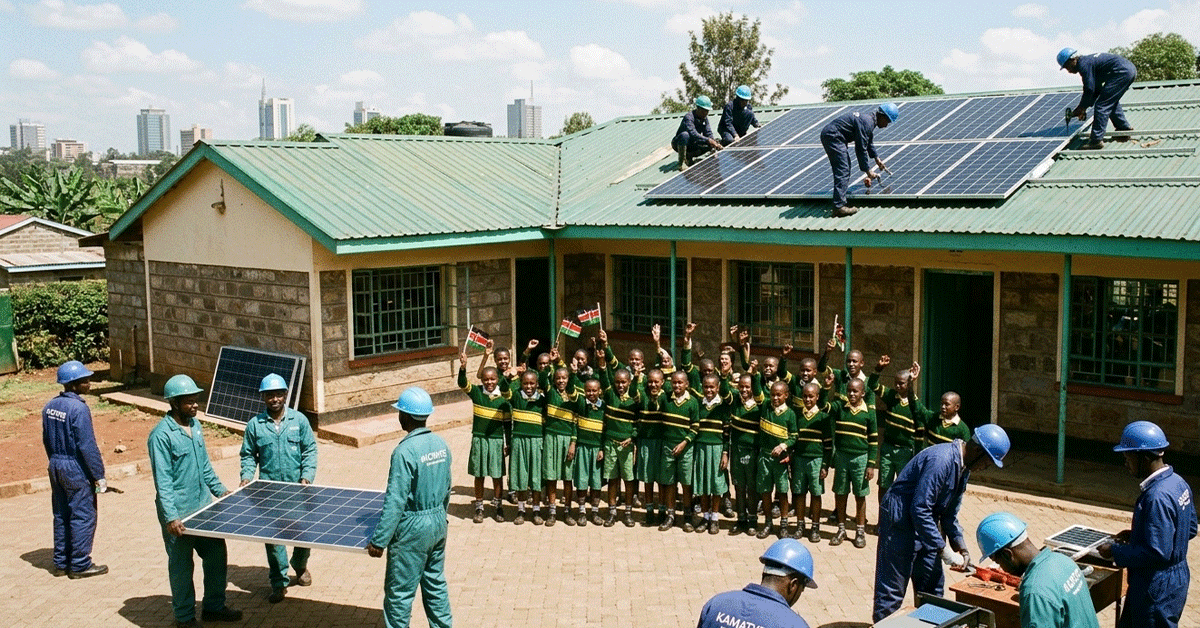
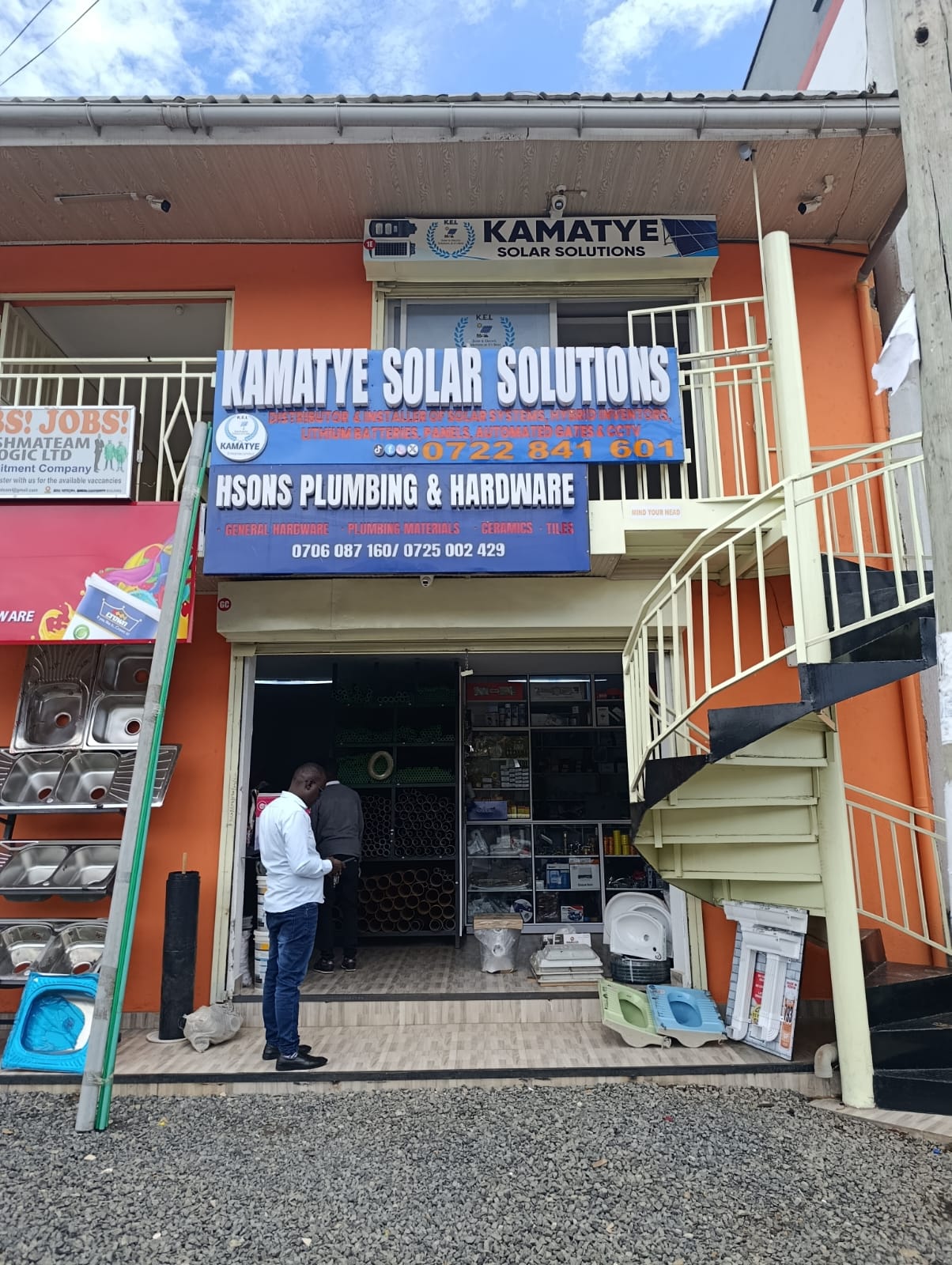
Solar panels convert sunlight into electricity for your home or business. In Kenya, monocrystalline panels from Tier-1 brands (Jinko, Canadian Solar, Trina, JA Solar, Longi) are the standard choice because they handle heat and cloud well. Panels typically cost from about KSh 7,000 to KSh 25,000 each depending on wattage and brand (indicative, 2026 — verify current); a typical home needs 6–12 panels. Kamatye supplies and installs solar panels across Nairobi, Kiambu and Machakos.
Kenya enjoys some of the best sunlight in the world — around 5–6 peak sun hours a day — which makes solar panels one of the most cost-effective energy investments available. But panels vary widely in type, efficiency, wattage and brand, and the right choice depends on your roof space, budget and energy needs. This guide explains the panel types available in Kenya, how to size them, what they cost, and which brands are worth trusting, so you can buy with confidence.
Types of solar panels available in Kenya
Three panel types appear in the Kenyan market, but one dominates for good reason.
| Panel Type | Typical Efficiency | Best For | Trade-off |
|---|---|---|---|
| Monocrystalline (incl. PERC / TOPCon) Recommended | ~20–23%+ | Most Kenyan homes & businesses; limited roof space | Slightly higher upfront cost |
| Polycrystalline | ~15–17% | Budget builds with ample roof / ground space | Lower efficiency; needs more panels; being phased out globally |
| Bifacial | Mono + rear-side gain | Ground-mounted / large installations | Needs reflective surface & spacing to pay off |
For most Kenyan installations, monocrystalline panels are the standard choice — they perform better in high heat and in the diffuse light of overcast days (which matters during Nairobi's long-rains season), and they produce more power per square metre so you need fewer panels. Polycrystalline is cheaper per panel but is increasingly being phased out as the price gap with mono has narrowed.
Solar panels we supply in Kenya
We stock a range of Tier-1 monocrystalline panels to suit every installation — from small home systems to large commercial arrays.
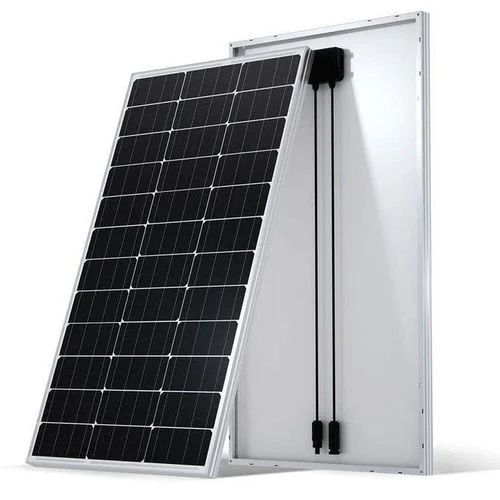
Standard residential panels ideal for 2–4 bedroom homes. High efficiency and reliable performance in Kenya's climate.
Get Quote →
Tier-1 TOPCon/PERC panel — ideal for small Nairobi rooftops where you need maximum output from fewer panels.
Get Quote →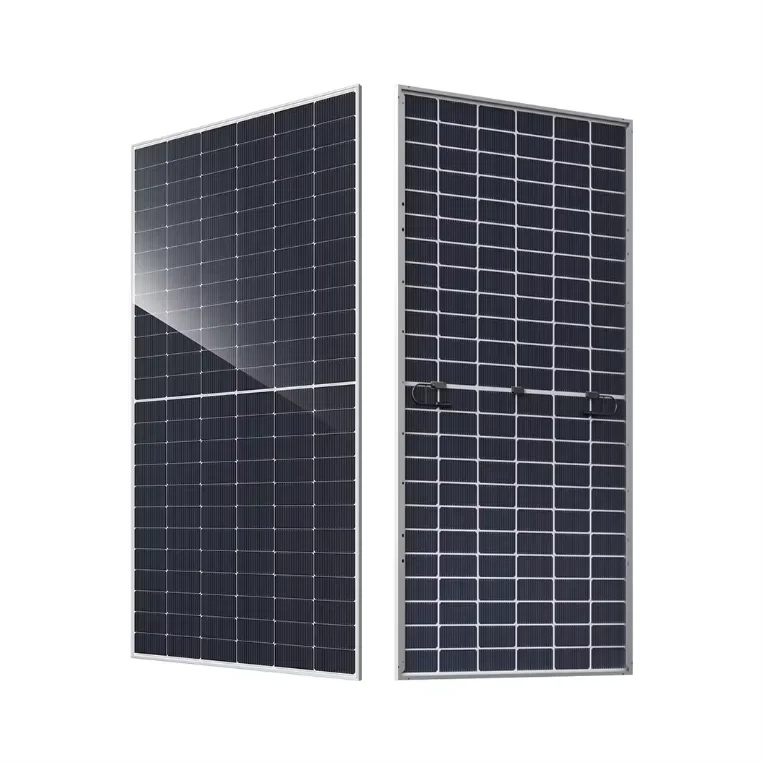
All-weather bifacial panel captures light from both sides — perfect for ground-mounted and large commercial arrays.
Get Quote →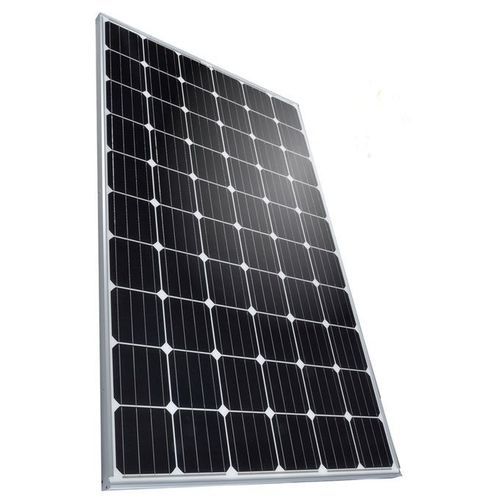
Reliable 400W panel offering excellent value for standard home and small business solar systems.
Get Quote →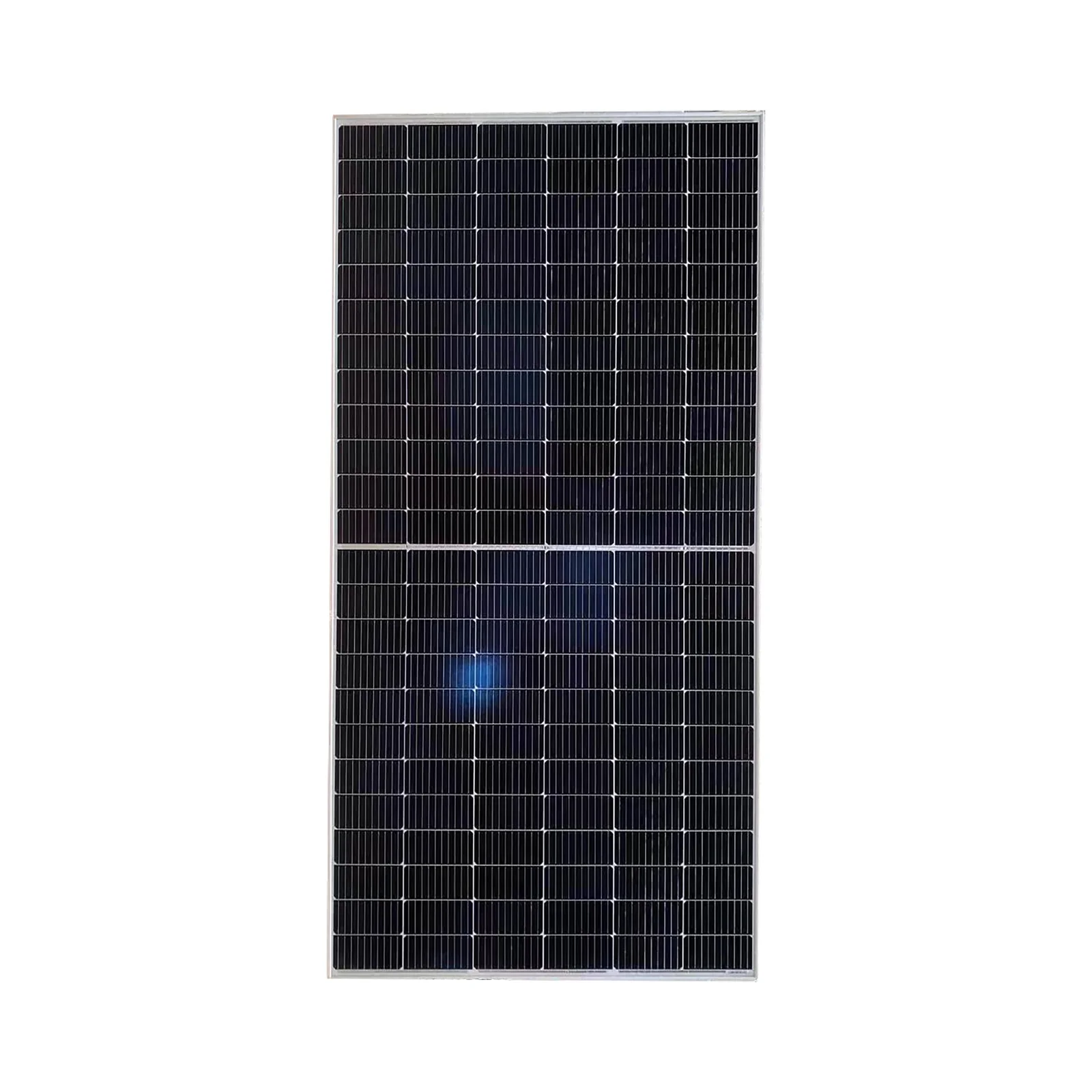
Compact 300W panel for smaller systems, off-grid setups and homes with limited roof space.
Get Quote →More Panels Available
PERC, TOPCon & custom commercial configurations — contact us for the full range.
How many solar panels does your home need?
The number of panels depends on your daily electricity use (kWh), the wattage of each panel, and how much of your consumption you want solar to cover. A practical starting point for Kenyan homes:
| System Size | Approx. Panels (450–550W each) | Typical Fit |
|---|---|---|
| 2 kW | ~4–6 panels | Small home / essentials only |
| 3–5 kW Most Popular | ~6–12 panels | Typical 2–4 bedroom home |
| 5–8 kW | ~12–18 panels | Large home / small business |
| 10 kW+ | ~20+ panels | Commercial / institutional |
Tip: Higher-wattage panels (550W+) mean fewer panels for the same output — useful for small Nairobi rooftops where space is tight. The right count comes from your actual KPLC consumption, not a rule of thumb. Send us your usage for a free sizing →
Solar panel prices in Kenya (2026)
Panel pricing is driven mainly by wattage and brand. A useful way to compare is price per watt (panel price ÷ wattage) — lower usually means better value, though brand reputation and warranty matter too. The figures below are indicative Kenyan market ranges for the panels alone — verify current pricing before purchase.
Lighting & small off-grid kits
Standard home systems
Modern homes / space-saving
Industrial / large arrays
| Panel (Wattage Class) | Indicative Price Each (KES, 2026)* | Typical Use |
|---|---|---|
| Small (100–150W) | ~KSh 4,000 – 8,500 | Lighting, small off-grid kits |
| Residential (300–405W) | ~KSh 8,500 – 12,500 | Standard home systems |
| High-output (450–550W) | ~KSh 12,000 – 25,000 | Modern homes / space-saving |
| Commercial (550W+) | up to ~KSh 55,000 | Industrial / large arrays |
* Indicative ranges (2026) compiled from Kenyan market sources. Prices are for panels only (excluding inverter, batteries, mounting and installation), vary by brand, wattage and quantity, and change with exchange rates — verify current pricing. Bulk orders (20+ panels) often attract volume discounts.
As a system guide, the panels for a typical 5 kW home array (9–12 panels) commonly total around KSh 90,000–160,000 (2026, indicative — excludes inverter, batteries and installation). For a complete installed system cost, see our solar installation services page.
Get an itemised quote for your panels & system →Best solar panel brands in Kenya
The most established, widely-supported panel brands in Kenya are Tier-1 monocrystalline manufacturers. Kamatye supplies genuine Tier-1 panels — confirm current brands and stock with us before ordering.
Most widely stocked; Tiger Neo / TOPCon range; strong local availability
Reliable value; long track record; widely available across Kenya
Tier-1 performance and strong 25-year performance warranties
High-output models ideal for small Nairobi rooftops
Leading mono / TOPCon technology; world-record efficiency ratings
Brand availability reflects the Kenyan market as of 2026. Prioritise panels with genuine manufacturer warranties (typically 25-year performance) and confirmed local support. Confirm current models and stock with us before ordering.
How to choose the right solar panels
Start from your KPLC bills (kWh/day), not a guess.
Best for Kenya's heat and light — outperform poly in real-world conditions.
Look for ~25-year performance warranties with local support that will still exist in 10 years.
Not just sticker price — lower price per watt usually means better value.
High-wattage panels save space on small urban roofs — fewer panels, same output.
Panels must be matched to your inverter, battery and charge controller.
Panels are one part of your system
Solar panels work alongside other components we supply and install. Explore each:
Solar Inverters
Convert panel DC into usable AC and manage backup power
Solar Batteries
Store energy for night-time use and power outages
Charge Controllers
Regulate charging to protect your batteries and panels
Full Installation
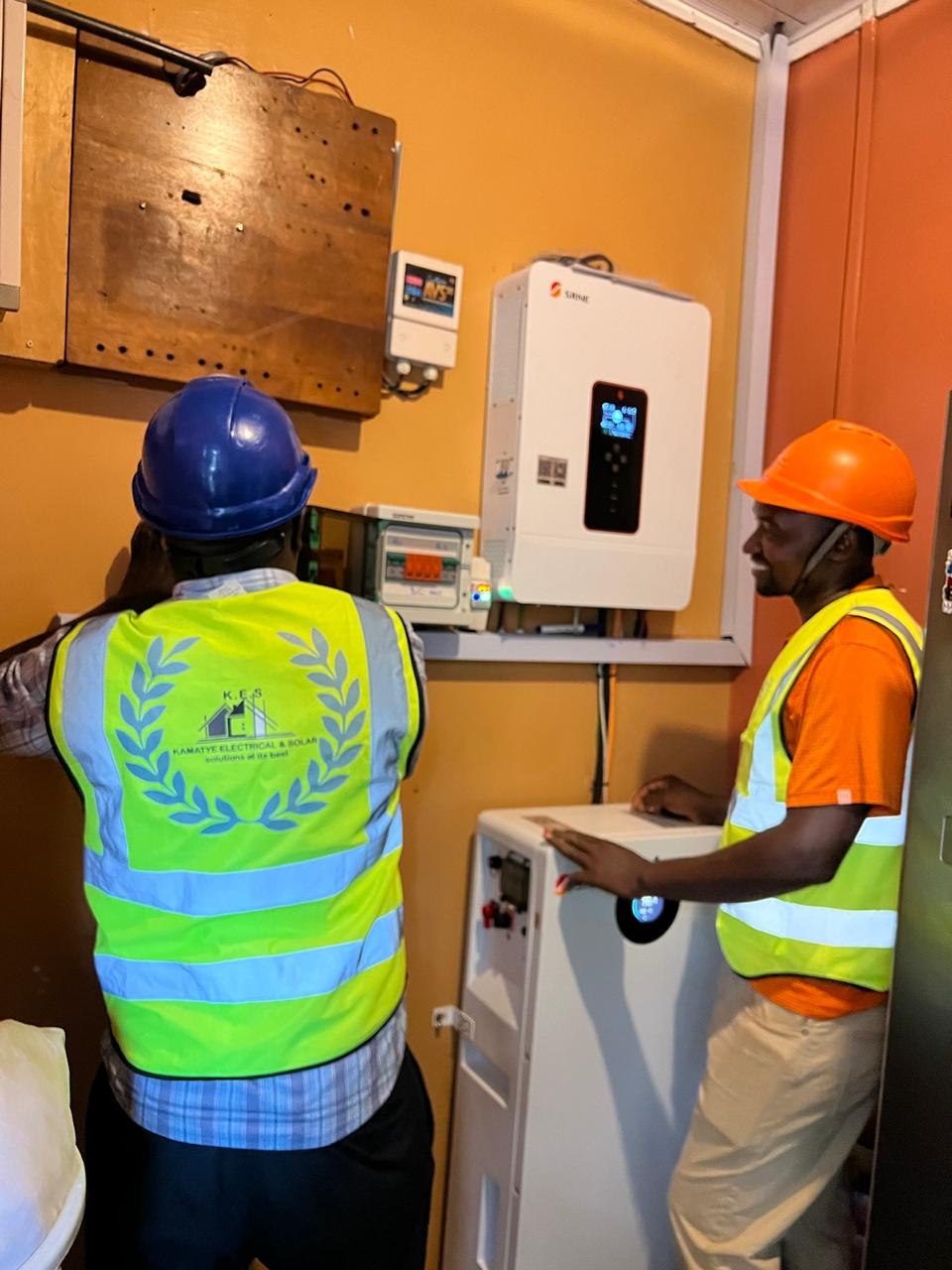
Design, supply, install and maintain the complete system
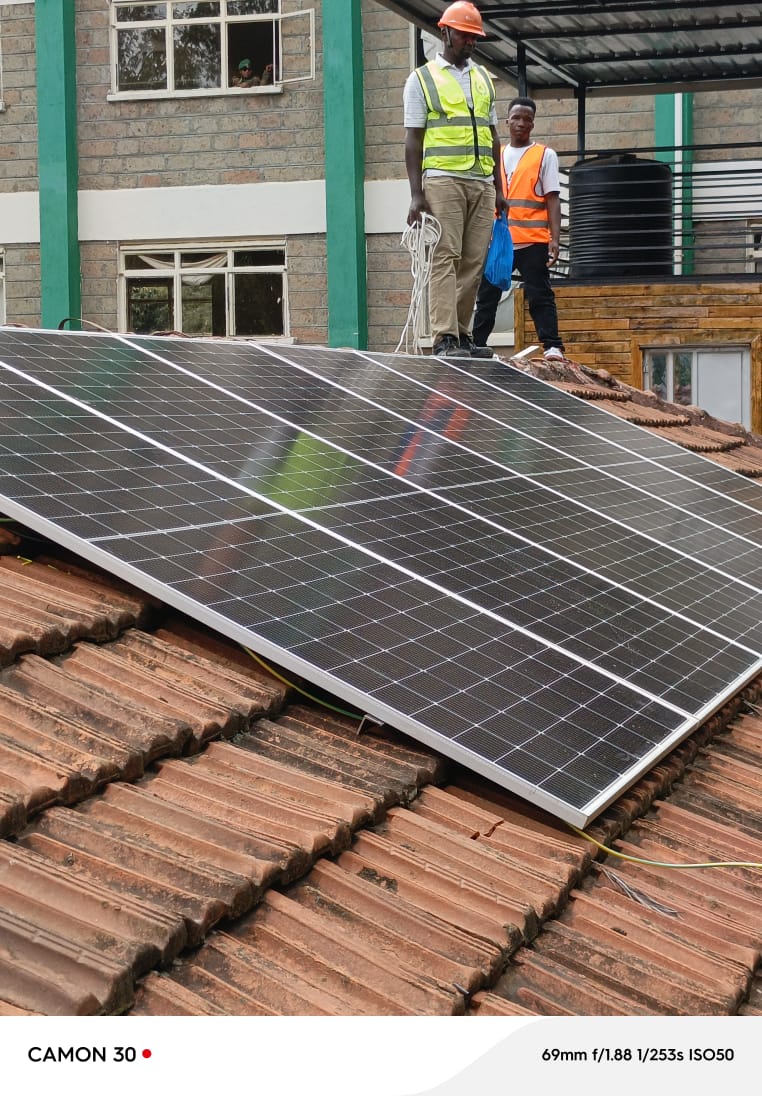
What is a solar panel and how does it work?
A solar panel is made of silicon photovoltaic (PV) cells. When sunlight hits the cells, it knocks electrons loose and generates direct current (DC) electricity.
That DC power is then converted to the alternating current (AC) your appliances use by a solar inverter. Panels are the part of the system that generates your power — so their quality and sizing directly determine how much electricity you produce.
1. Sunlight hits the panels
PV cells absorb sunlight and produce DC electricity throughout the day.
2. Inverter converts DC → AC
A solar inverter converts DC power to AC for your appliances.
3. Power your home
Use solar electricity directly; store surplus in batteries for night or outages.
Frequently asked questions
Everything you need to know about solar panels in Kenya.
How much do solar panels cost in Kenya?
Indicatively (2026, verify current): individual panels run from about KSh 7,000 for residential 300–400W models up to KSh 25,000 for high-output 550W panels, and up to ~KSh 55,000 for large commercial panels. The panels for a typical 5 kW home array total roughly KSh 90,000–160,000, excluding inverter, batteries and installation.
Which is better: monocrystalline or polycrystalline panels?
For Kenya, monocrystalline panels are generally better — they're more efficient (~20–23% vs ~15–17%), perform better in heat and cloud, and need less roof space. Polycrystalline costs less per panel but is being phased out as the price gap has narrowed.
How many solar panels do I need for my home in Kenya?
It depends on your daily energy use and panel wattage. As a guide, a typical 2–4 bedroom home on a 3–5 kW system needs roughly 6–12 panels of 450–550W. We size the exact number from your KPLC consumption.
What are the best solar panel brands in Kenya?
The most trusted Tier-1 monocrystalline brands in Kenya include Jinko, Canadian Solar, Trina, JA Solar and Longi, all offering high efficiency and long performance warranties with local support. Confirm which Kamatye currently stocks before ordering.
How long do solar panels last?
Quality Tier-1 panels typically carry 25-year performance warranties and often still produce around 80%+ of their rated output after 25 years. Actual lifespan depends on panel quality, installation and maintenance.
Do you install the panels you sell?
Yes — we supply and professionally install panels as part of a complete, correctly sized system, serving Nairobi, Kiambu and Machakos. Contact us to confirm coverage for your area.